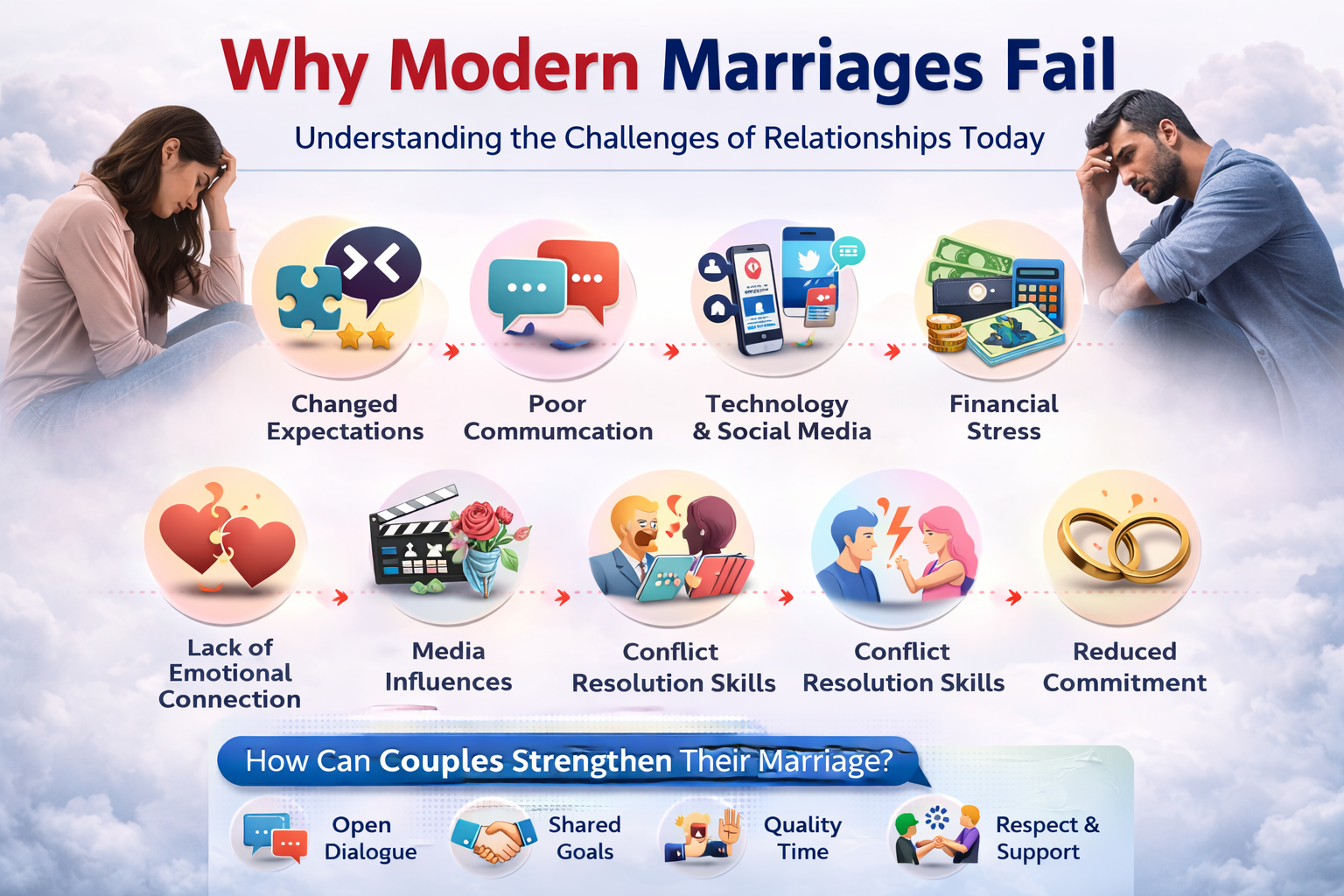
💔 Modern relationships face new pressures that previous generations rarely experienced. Understanding these challenges can help couples build stronger, healthier marriages.
Marriage has always required effort, patience, and commitment. However, modern marriages often face unique challenges that can make maintaining a long-term relationship more difficult than before. Rapid lifestyle changes, evolving social expectations, financial pressures, and the influence of technology have transformed how couples interact with each other. While many marriages remain strong and fulfilling, the increasing divorce rates in many countries suggest that modern couples are struggling with issues that earlier generations did not experience in the same way. Understanding why modern marriages fail can help couples avoid common mistakes and build healthier relationships. At Marriage Experts, we share insights about relationships, communication, and building strong partnerships. Learn more: About Us.
One of the biggest reasons modern marriages struggle is the shift in expectations. In the past, marriage was often viewed as a lifelong commitment with clearly defined roles. Today, relationships are built on emotional connection, equality, personal growth, and mutual support. While these changes can create healthier partnerships, they also raise expectations. Many people expect their spouse to fulfill multiple roles — partner, best friend, emotional supporter, and financial contributor. When these expectations are not met, dissatisfaction can grow within the relationship.
Poor communication remains one of the most common reasons marriages fail. Many couples struggle to express their feelings honestly or avoid discussing difficult topics. Common communication issues include: avoiding serious conversations, misunderstanding each other's needs, bottling up emotions until conflicts explode, using criticism instead of constructive discussion. Healthy communication helps couples understand each other's concerns and resolve conflicts before they grow into larger problems.
Technology has changed how couples interact. While smartphones and social media help people stay connected, they can also create distance in relationships. Excessive phone use, constant social media comparison, and online distractions often reduce the quality time couples spend together. In some cases, emotional connections can shift toward online interactions instead of real-life relationships. Digital communication can never fully replace meaningful face-to-face connection.
Financial problems are another major cause of marital conflict. Rising living costs, job instability, and financial expectations can create tension between partners. Couples may disagree about: spending habits, debt management, saving strategies, career priorities. When financial stress builds over time, it can negatively impact emotional intimacy and trust within the marriage.
Over time, many couples become busy with work, responsibilities, and family obligations. As routines become more demanding, emotional connection may weaken. Signs of emotional distance include: less meaningful conversation, reduced affection and appreciation, spending less quality time together, feeling disconnected from each other's lives. Maintaining emotional closeness requires consistent effort and attention from both partners.
Movies, television, and social media often portray idealized versions of relationships. These portrayals can create unrealistic expectations about marriage. When real-life relationships do not match these idealized images, couples may feel disappointed or believe something is wrong with their marriage. In reality, every relationship experiences challenges, disagreements, and difficult periods. Healthy marriages focus on growth and understanding rather than perfection.
Disagreements are normal in any relationship. However, the way couples handle conflict determines whether their marriage becomes stronger or weaker. Some couples avoid conflict entirely, while others argue aggressively without finding solutions. Without healthy conflict resolution skills, small disagreements can turn into long-term resentment. Successful couples learn to discuss problems calmly, listen to each other, and find compromises that respect both partners.
In modern society, people often value independence and personal freedom. While these values are important, they can sometimes reduce commitment to long-term relationship effort. When challenges arise, some couples may see separation as the easiest solution rather than working through difficulties together. Strong marriages require patience, compromise, and the willingness to grow together over time.
Despite the challenges modern marriages face, many couples build lasting and fulfilling relationships. Healthy marriages often share several key habits: open and honest communication, regular quality time together, mutual respect and emotional support, shared financial planning, willingness to resolve conflicts constructively. Marriage is not about avoiding problems but learning how to face them as a team.
Modern marriages face unique pressures created by changing lifestyles, technology, financial stress, and evolving expectations. However, these challenges do not mean that successful marriages are impossible. Couples who prioritize communication, trust, emotional connection, and mutual understanding are more likely to build strong relationships that endure over time. Marriage is a partnership that grows stronger when both partners remain committed to supporting each other through both the difficult and joyful moments of life. Explore more: About Us, Verified Profiles, Privacy Policy, Contact Us.