Introduction
Intercultural marriages are increasing worldwide, but they are not without challenges. Understanding intercultural marriage challenges helps couples prepare for potential obstacles and build stronger, more resilient relationships. As globalization continues, couples from different ethnic backgrounds, nationalities, religions, and languages are forming lifelong partnerships. At MarriageXpert, we observe that many successful multicultural marriages thrive — but only when both partners prepare intentionally.
According to migration data published by the United Nations DESA, global mobility continues to rise. Similarly, the World Bank reports steady international migration trends. As diverse societies grow, intercultural relationships naturally increase. But diversity brings both beauty and complexity.
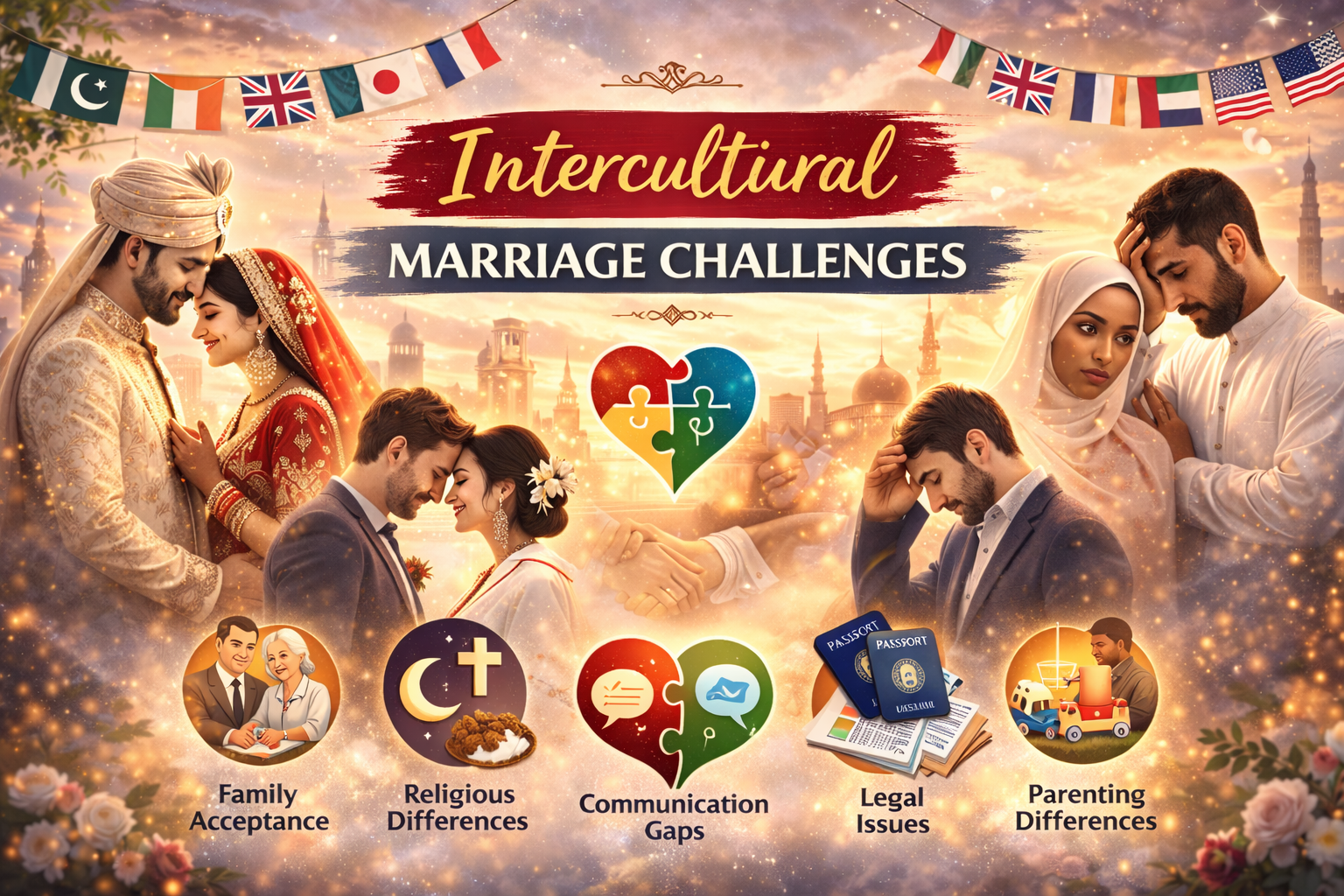
One of the biggest cross-cultural marriage problems is family resistance. Parents may worry about cultural loss, language differences, religious compatibility, and social perception. Families sometimes prefer marriage within their community. Couples must approach this challenge with patience, respectful dialogue, and transparency. Structured and verified platforms like MarriageXpert Verified Profiles help families feel more secure about proposals.
Interfaith marriage challenges can be significant. Couples must discuss children’s religious upbringing, religious celebrations, daily practices, and long-term faith compatibility. Islamic marriage guidance can be explored through reputable scholarly resources such as IslamQA. Clarity early prevents conflict later.
Culture influences communication patterns. For example: some cultures are direct, others are indirect; some prioritize emotional expression, others emphasize restraint. Misunderstandings can arise even when both partners have good intentions. Effective communication skills are essential.
Language differences can cause misinterpretation, emotional frustration, and social discomfort. Couples may need patience, language learning efforts, and cultural sensitivity. Bilingual families often turn this challenge into a strength.
International marriage conflicts may arise due to visa processing, residency requirements, civil registration laws, and citizenship applications. Official immigration guidance can be reviewed at USA.gov and GOV.UK. Legal clarity protects both spouses.
Different cultures may have different expectations about household responsibilities, financial management, extended family involvement, and social interaction norms. Without discussion, assumptions may cause tension.
Intercultural couples must align on discipline styles, language education, religious exposure, and cultural traditions. Parenting disagreements can strain marriage if not addressed early.
Multicultural relationship issues are not always external. Emotionally, couples may experience identity confusion, social isolation, feeling misunderstood, and pressure to “choose” one culture. Psychological research platforms like Pew Research Center highlight the impact of identity on relationship stability. Emotional intelligence becomes critical.
In some communities, intercultural marriage may be discouraged, couples may face gossip, and cultural loyalty may be questioned. Social acceptance varies by region. However, urban areas increasingly normalize diversity.
✅ 1. Open Communication – Discuss core values, non-negotiables, future plans, and family expectations. Transparency prevents future shock.
✅ 2. Premarital Counseling – Professional or religious counseling can help couples identify potential friction points, learn conflict resolution skills, and build communication tools.
✅ 3. Cultural Learning – Make an effort to learn your spouse’s language, celebrate both traditions, and respect cultural customs. Mutual respect builds unity.
✅ 4. Clear Legal Planning – Ensure civil registration is complete, visa requirements are met, and financial expectations are transparent. Proper documentation reduces stress.
✅ 5. Verified Matchmaking – Responsible matchmaking platforms like MarriageXpert provide structured, transparent proposals to reduce uncertainty. You can review their ethical process via About Us and contact support through Contact Page. Privacy transparency is available at Privacy Policy.
Not necessarily. Success depends on shared values, emotional maturity, conflict management, and respect. Culture alone does not determine compatibility. Strong communication and preparation matter more than background differences.
Despite challenges, intercultural marriages offer broader worldview, multilingual children, cultural enrichment, global family networks, and greater empathy. Diversity strengthens families when handled wisely.
Experts predict continued growth in cross-border marriages, interfaith unions, multicultural families, and international mobility. Globalization is not slowing down. Preparation and education are the keys to long-term stability.
Intercultural marriage challenges are real — but they are manageable. With respect, patience, communication, legal awareness, and shared faith and values, multicultural couples can build strong, fulfilling marriages. For structured, verified, and serious intercultural proposals, visit MarriageXpert and Verified Profiles. Marriage is not about eliminating differences — it is about learning to grow together despite them.